

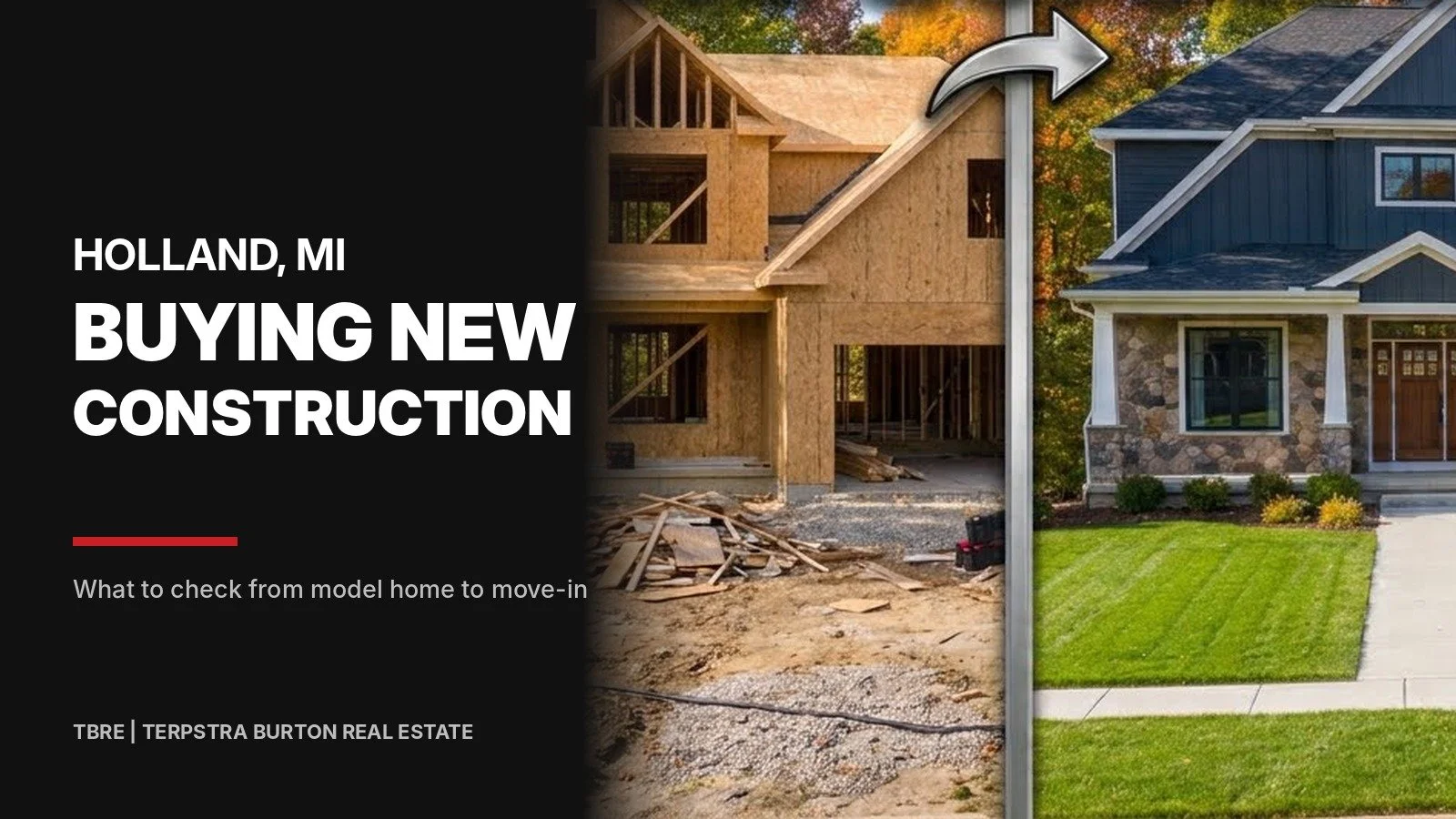
When we walk a new build with a buyer, we're looking at what will be hidden a year from now: the framing and flashing before the drywall goes up, the grading before the lawn grows in, and the builder's older homes before you sign. Fresh paint, new carpet, and quartz countertops look great on tour day, but they don't tell you how the house will hold up through 20 West Michigan winters.
We grew up in the building industry. Sean worked on his father's custom home job sites from age 13, and Liz grew up in her family's lumber yard painting boards, loading orders, and delivering lumber. So we look at a new house three ways: the way a builder would, the way an inspector would, and the way a designer and future seller would. That last one matters more than people expect, because the choices you make with the builder now shape what the home is worth when you sell it.
If you're thinking about new construction in Holland, Grand Haven, or anywhere along the Lakeshore, here's what we check, and when.
Why it's worth slowing down this fall
Buyers in Ottawa County have more homes to choose from than they did a year ago, so there's time to compare builders and ask hard questions. In September 2026, active listings in the county rose 22% to 481, while closed sales fell 24% to 211 (WMLAR).
Prices haven't softened with it. The county's median sale price rose 6.1% to $430,000. Freddie Mac's 30-year fixed rate averaged 7.18% on November 5, 2026, up from 6.22% a year earlier (Freddie Mac). With rates there, every dollar in the contract matters, so it pays to know exactly what you're getting before you commit.
Before you sign: vet the builder, not just the model home
The model home shows a builder at their best, and their homes from three to five years ago show you the rest.
Drive past older homes they built. Look at rooflines, siding seams, grading, and how the driveway has settled.
Ask what's in the base price. Base pricing often leaves out window treatments, landscaping, appliances, or a finished lower level. Get the full list in writing.
Read the warranty before you fall for the floor plan. Know what's covered, for how long, and how claims get handled.
Remember who the builder's sales team works for. They represent the builder. Bring your own agent to the very first visit, since some builders won't recognize an agent who shows up later.
Ask about concessions, not just price. Builders with homes to move may offer upgrades, closing-cost help, or a rate buydown. With rates above 7%, a buydown can be worth more than a small price cut.
Picking upgrades: think like the next buyer
Spend your upgrade budget on the things that are hard to add after the walls close, and save the easy, inexpensive finishes for later if you need to. Paint colors, light fixtures, and cabinet hardware are simple, low-cost updates any time. Wiring, plumbing, and blocking inside the walls are not.
When we sell homes, these are the upgrades buyers notice and pay for. Planning for them during the build costs far less than retrofitting:
Home office
What to ask for during the build: Extra outlets, a data line, and good overhead lighting in a spare bedroom or den
Why it pays off: Buyers want a defined place to work, not a room they have to imagine as one
Built-in nooks
What to ask for during the build: Framing or blocking for a window seat, mudroom bench, or reading nook
Why it pays off: A built-in stands out in listing photos and makes an odd corner useful
Wall sconces and lighting
What to ask for during the build: Wiring and boxes for sconces by the bed, fireplace, or vanity, plus dimmer switches
Why it pays off: Running wire before drywall is far easier than cutting into finished walls
Coffee bar
What to ask for during the build: An outlet and a section of counter or cabinets set aside, ideally with a backsplash
Why it pays off: A small feature that makes the kitchen feel planned
Countertops
What to ask for during the build: Quartz or solid surface where laminate is the standard
Why it pays off: The biggest visual change in a kitchen, and the one buyers notice first
Lower-level plumbing
What to ask for during the build: Rough-in for a future bathroom
Why it pays off: Makes finishing the lower level later much simpler; The Haven, a new build we listed in Grand Haven Township, has plumbing roughed in for another bathroom below a daylight lower level
During the build: inspect before the walls close
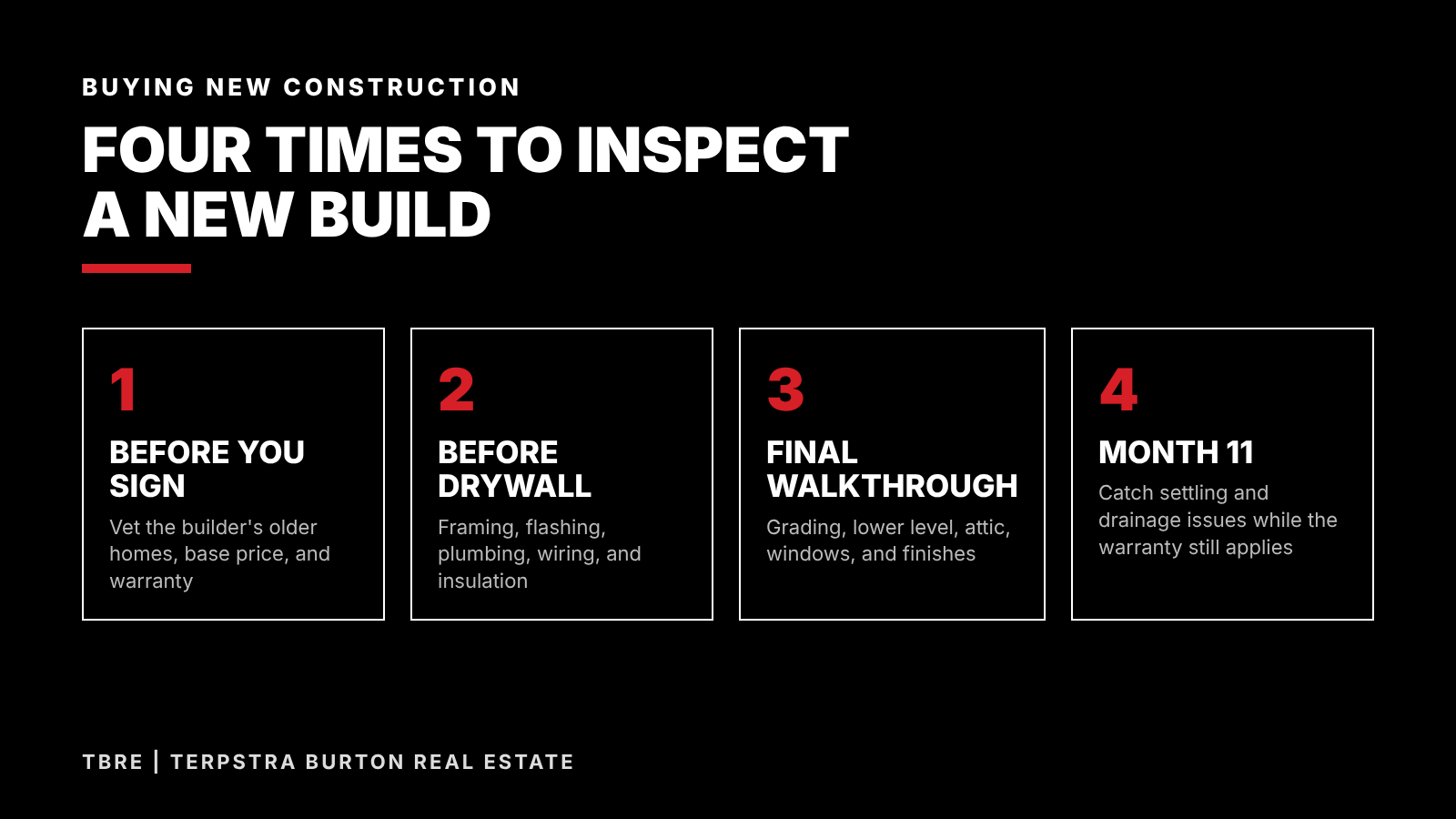
The most valuable inspection on a new home happens before drywall, not after. Once the walls are closed, framing, wiring, and plumbing are out of sight for good.
A municipal inspection confirms the home meets minimum code. A private inspector you hire works for you and looks past the minimum. Plan on two visits:
Pre-drywall. Framing, window and door flashing, plumbing and electrical runs, and insulation around rim joists and attic access.
Pre-closing. The finished home, top to bottom, before you sign.
Ask the builder up front whether they allow third-party inspections and how much notice they need. A confident builder says yes without hesitation.
The final walkthrough: what we look at
Your final walkthrough is the last time the builder has a strong reason to fix things quickly. After closing, every repair becomes a warranty request. Here's our list:
Grading and drainage. Soil should slope away from the foundation on every side. West Michigan's sandy soils and spring thaws are unforgiving here.
Gutters and downspouts. Installed, connected, and discharging well away from the house.
The basement or lower level. Check for damp spots, efflorescence on the walls, and a working sump pump if there is one.
The attic. Insulation depth should be even, with no gaps near the hatch. Bath fans should vent outside, not into the attic.
Windows and doors. Open, close, and lock every one. Look for drafts, sticking, and uneven gaps.
Every fixture and appliance. Run each faucet and shower, flush each toilet, and cycle the dishwasher and laundry.
Finish details. Check caulk lines, trim joints, and paint touch-ups in good light. Small things here hint at how carefully the big things were done.
Write everything down and get the builder's sign-off on a punch list with completion dates before you close.
After closing: use your warranty before it runs out
Many builder warranties cover workmanship for the first year, so schedule another inspection around month 11. By then the home has been through a full West Michigan winter and a spring thaw.
That's when settling cracks, drywall nail pops, door alignment, and drainage problems tend to show up. Finding them in month 11 means the builder fixes them. Finding them in month 13 usually means you do.
Keep every document from the purchase in one folder, including the warranty, punch list, inspection reports, and any emails about changes.
How we can help
We walk new builds the way we were taught on job sites: from the framing out, not the finishes in. We'll help you vet the builder, plan upgrades that add value when you sell, and catch problems while the builder still has to fix them.
Thinking about buying a new build but not sure what to look for? Talk to us. We will walk it with you before you sign, before the drywall, and before you close.
Liz Burton (616) 218-6402 lizburton@homelakeshore.com
Sean Terpstra (616) 886-9839 sean@homelakeshore.com
Sources: WMLAR, West Michigan Housing Market September 2026; Freddie Mac, Primary Mortgage Market Survey, November 5, 2026