

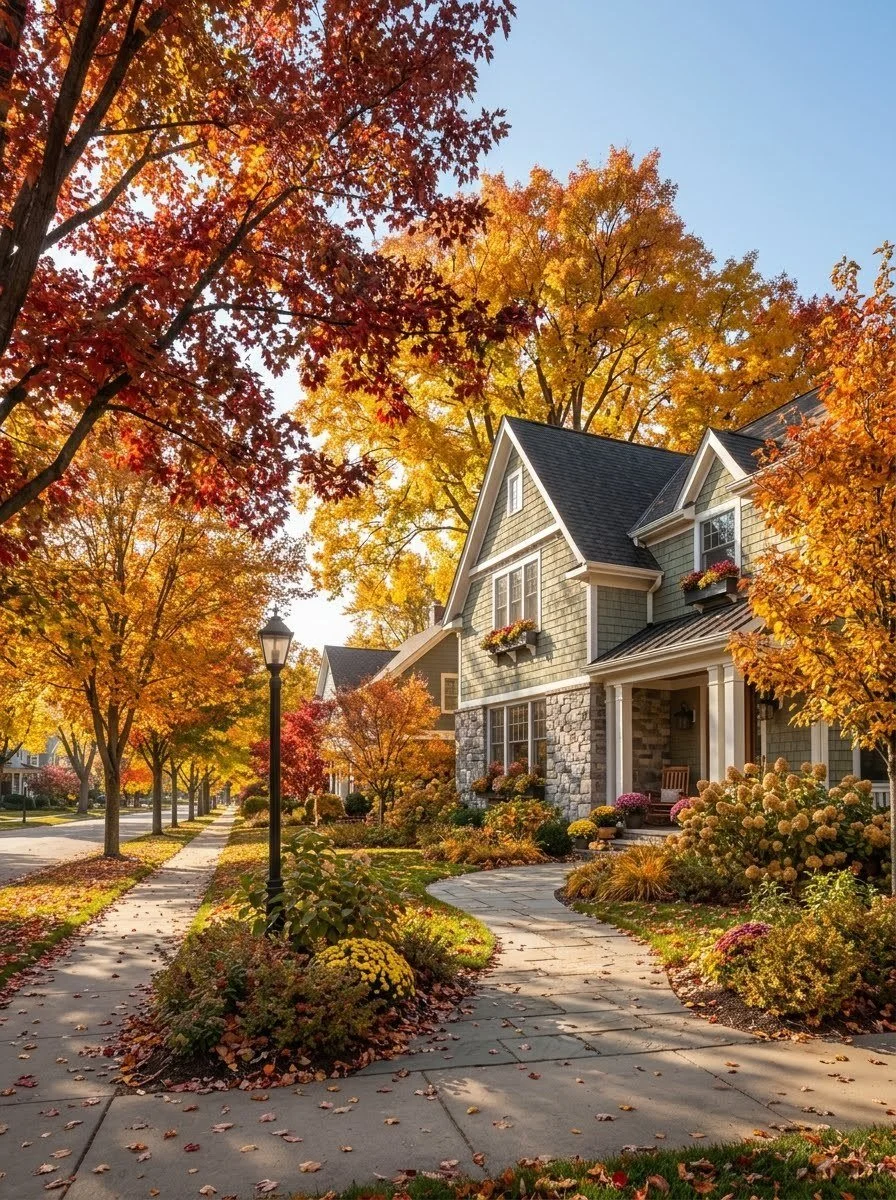
Buying in Holland this fall means more homes to choose from, and more chances to pay too much for a pretty house with tired bones. We walk every showing the way a builder, an inspector, and a designer would, so you know what you're buying before you write an offer.
We grew up in the building industry. Sean worked on his father's custom home job sites from the age of 13, and Liz grew up in her family's lumber yard painting boards, loading orders, and delivering lumber. That's why we look past the staging to the roof, the foundation, the windows, and the drainage. It's also why we can tell you which dated finishes are easy, inexpensive fixes you can live with now and change later.
What Holland's market means for buyers right now
Buyers have more homes to choose from this fall, but higher mortgage rates make every dollar of the budget count. In September 2026, Ottawa County had 481 active listings, up 22% from a year earlier, while closed sales fell 24% and the median sale price rose 6.1% to $430,000 (WMLAR). Homes averaged 30 days on the market.
Freddie Mac's average 30-year fixed rate was 7.24% on October 29, 2026, up from 6.17% a year earlier (Freddie Mac). That's why we start every search with your monthly payment, not just a price.
The buying process, step by step
Most Holland purchases follow the same seven steps, and the decisions that matter most happen before you write an offer.
Get pre-approved. Know your price range and monthly payment before you tour. With rates above 7%, small rate changes move your budget.
Define the house, not just the town. Decide on age, style, lot size, and how much work you're willing to take on. That narrows the search faster than a map.
Tour the way a builder would. We look at the roof, foundation, windows, mechanicals, and drainage on every showing, not just the kitchen.
Make an offer built on data. Recent comparable sales and days on market tell you where there's room to negotiate.
Inspect. Hire a qualified home inspector, and add specialists (sewer scope, radon, or roof) when the house calls for it.
Negotiate repairs or credits. Use the inspection to decide what to fix, credit, or accept.
Close. Your lender and title company handle the paperwork. We do a final walkthrough with you before you sign.
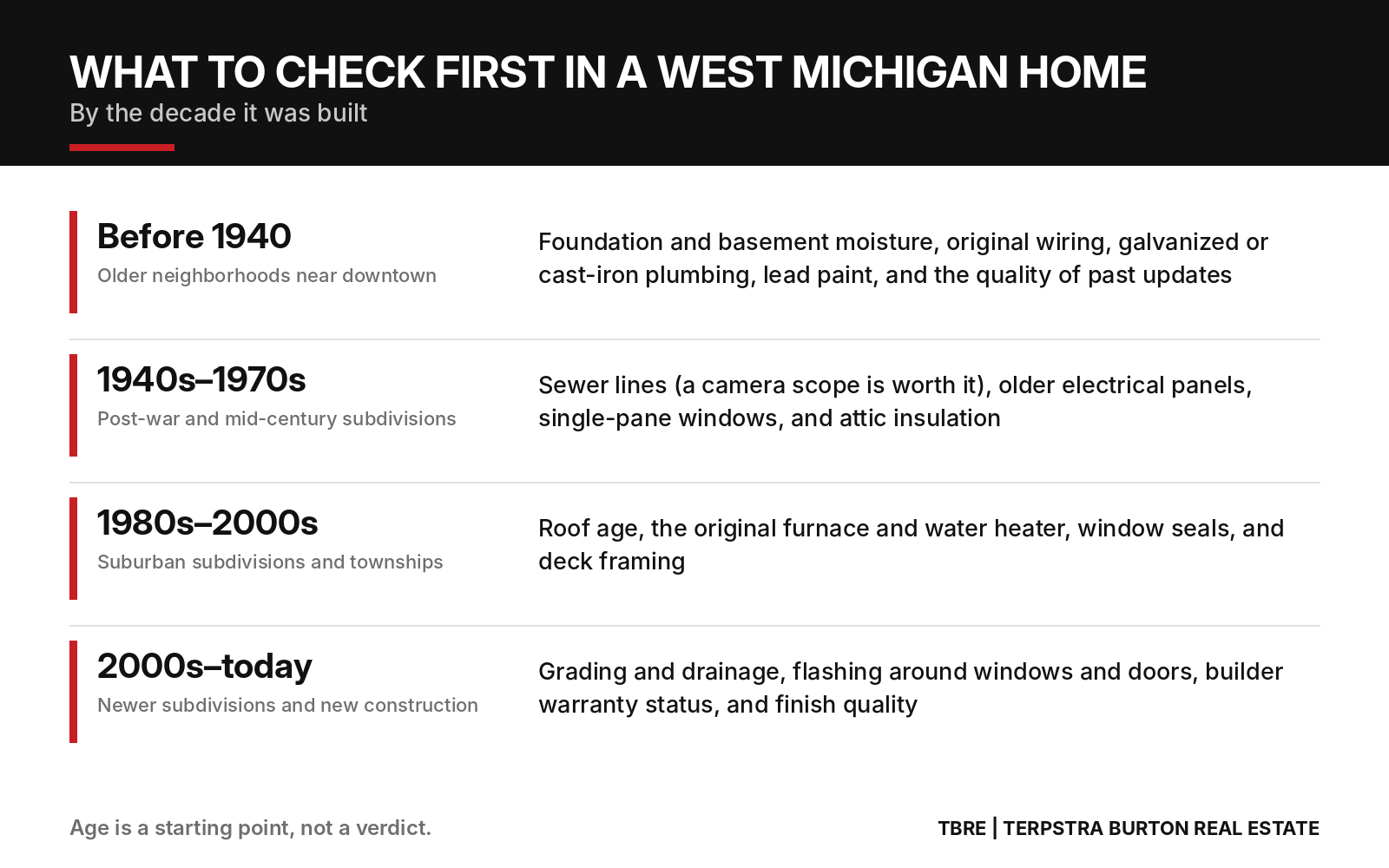
What to inspect by the age of the home
The Holland area has homes from every era, and each era has its own weak spots. Knowing them tells you where to look first and which specialist to call.
Before 1940 (older neighborhoods near downtown): foundation and basement moisture, original wiring, galvanized or cast-iron plumbing, lead paint, and the quality of past updates.
1940s–1970s (post-war and mid-century subdivisions): sewer lines (a camera scope is worth it), older electrical panels, single-pane windows, and attic insulation.
1980s–2000s (suburban subdivisions and townships): roof age, the original furnace and water heater, window seals, and deck framing.
2000s–today (newer subdivisions and new construction): grading and drainage, flashing around windows and doors, builder warranty status, and finish quality.
Age is a starting point, not a verdict. A well-kept 1925 home can outlast a rushed 2015 one.
Reading a house the way a builder would
The problems that cost the most money are rarely the ones that show up in listing photos. These are the ones we look for on every showing:
Water where it shouldn't be. Stains on ceilings or basement walls, efflorescence (white mineral deposits), fresh paint on just one wall, or a dehumidifier running hard.
Grading that slopes toward the house. It's one of the most common problems we see in West Michigan, and one of the easiest to miss in dry weather.
A flip that only looks new. New floors and counters over an old roof, old mechanicals, and no permits for the work.
Cracks that tell a story. Hairline cracks are normal. Stair-step cracks in block walls, or doors that won't latch, can point to movement.
Mechanicals near the end of their life. Check the age stickers on the furnace, water heater, and AC, and ask for service records.
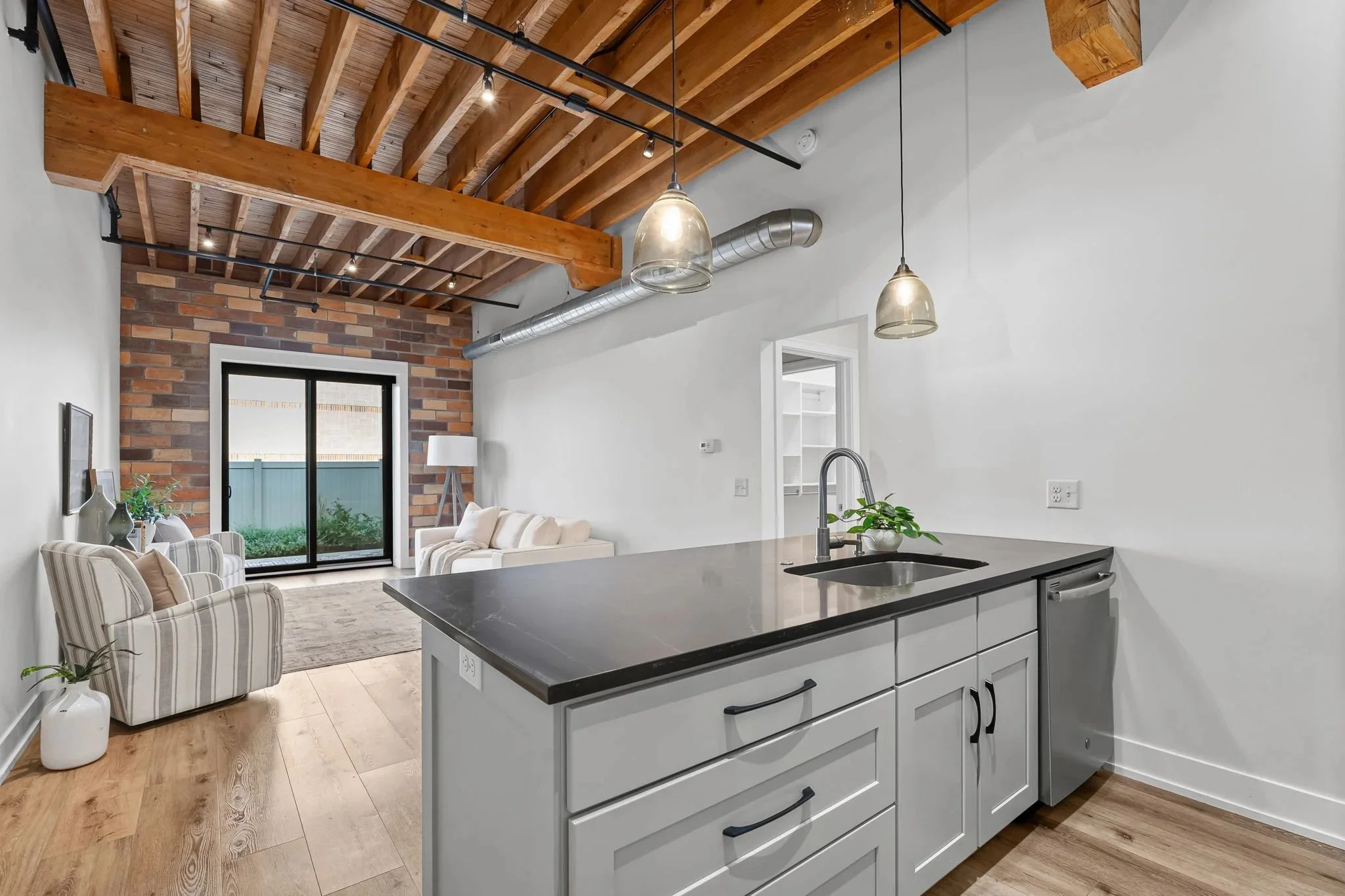
Dated finishes are often the best deal in the house
Worn paint, old fixtures, and tired flooring are inexpensive to fix, and they make other buyers walk past homes with good bones. We look at those homes the way a designer would: what it would take to make the house feel current, and which small upgrades would add more value than they cost when you sell someday.
Bold, scuffed, or dated paint: repaint in light neutrals. One of the cheapest changes, and rooms look larger and cleaner.
Dated light fixtures, faucets, and cabinet hardware: swap them. A small job that makes a whole room read as current.
Worn carpet: replace with a neutral, or refinish the hardwood that's often underneath. Flooring changes how every room feels.
Laminate or worn tile counters: new countertops, keeping the existing cabinets (painted if needed). The biggest visual change in a kitchen for a fraction of a remodel.
A spare room, den, or awkward corner: a home office, a built-in nook, a coffee bar, or wall sconces and dimmers. Turns unused space into a feature you'll use, and buyers notice later.
The things that are expensive to change are the ones in the section above: the roof, the foundation, the drainage, and the mechanicals. Major remodels and additions are a different conversation, and we'll tell you plainly when a house would need one.
Michigan details buyers often miss
A few Michigan rules change what a house really costs you, and none of them show up in the listing. For your own numbers, check with your assessor, lender, or title company.
Property taxes reset after you buy. Michigan's Proposal A limits how much a home's taxable value can rise each year (inflation or 5%, whichever is less). The year after a sale, the taxable value is "uncapped" to match the assessed value (City of Holland Assessor FAQ). Your taxes can be higher than the seller's, so ask your lender to estimate them.
File for the principal residence exemption. If the home is your primary residence, file the affidavit with the assessor for the city or township where it's located. The state deadlines are June 1 for the summer tax bill and November 1 for the winter bill (Michigan Treasury). In the City of Holland, the exemption is an 18-mill reduction (City of Holland).
Well and septic homes in Ottawa County. Since 1984, the county has required sellers to have private well and septic systems evaluated before ownership transfers, and the county gives the report to buyers at closing (Ottawa County Health). Read it closely, including any corrections it lists.
Making an offer in today's market
Buyers have more leverage this fall than they've had in a while, but the best homes in good condition still sell quickly. With more listings and fewer sales, many sellers are open to talking about terms.
Use days on market. A home that's been listed past 30 days may have room on price, repairs, or closing costs. A fresh listing in great condition may not.
Ask for what helps your monthly payment. A seller-paid rate buydown or a closing-cost credit can be worth more than a small price cut. Ask your lender to run both.
Keep your protections. With less competition, there's less reason to waive the inspection or appraisal contingencies.
Look past the finishes. Paint and fixtures are inexpensive to change. A roof, foundation, or drainage problem isn't.
Thinking about buying in Holland?
Are you looking to buy but worried you'll miss something on a showing? Talk to us. We will walk homes with you and tell you what we see, the good and the bad, before you make an offer!
Liz Burton (616) 218-6402 lizburton@homelakeshore.com
Sean Terpstra (616) 886-9839 sean@homelakeshore.com
Sources: WMLAR, West Michigan Housing Market September 2026; Freddie Mac, Primary Mortgage Market Survey; City of Holland, Assessor FAQ; Michigan Department of Treasury, PRE claim requirement; Ottawa County Department of Public Health, Real Estate Services